
The Truth About Cavitation Machine Settings:
Why One Size Does Not Fit All
The "Magic Number" Myth
The most asked question I get in my inbox by far is "What settings should I use?"
I get it. You want to be safe, and you want to see results. But here is the secret most training programs won't tell you: There is no such thing as a universal setting. If you are just copying a chart from a manual that was poorly translated, or using the same protocol your trainer taught you to use for every single client, you are likely undertreating your client or possibly overtreating your client.
To get real results, you have to stop looking for a magic number setting and start understanding the specs of your machine.
1. Understanding Body Contouring Machine Specifications
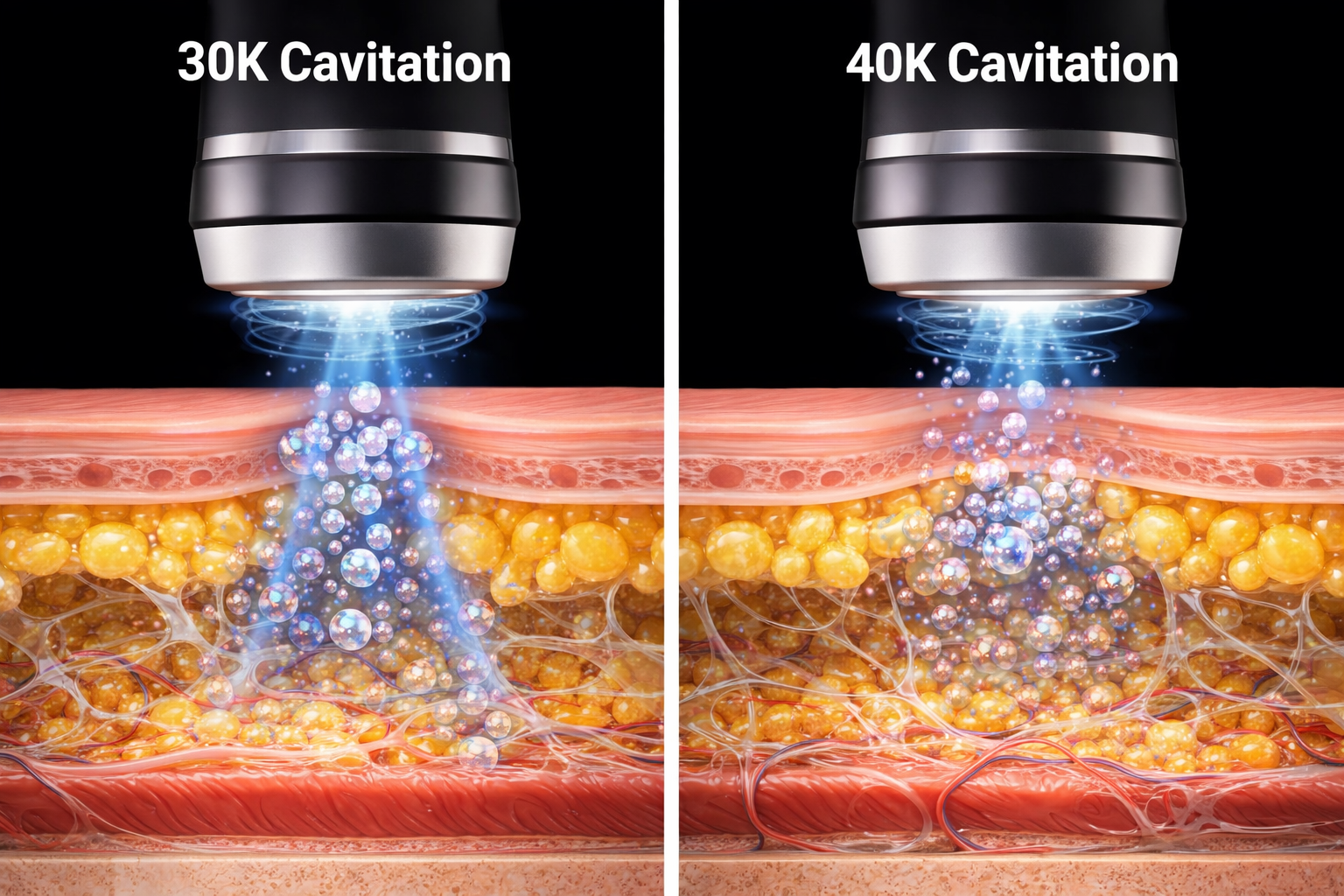 Every machine is built differently. A $500 portable unit does not have the same power output or frequency as a $5,000 professional one.
If you don't know your machine's cavitation frequency, you are essentially flying blind.
- The Rule: Lower frequencies penetrate deeper into the fat (30khz), while higher frequencies (80khz) are more superficial.
- The Fix: You must check your machine's manual or listing for the actual output.
2. Why Radiofrequency Intensity Depends on Tissue Impedance
In my RF trainings, I talk a lot about impedance. This is basically how much the body resists the electrical current.
Factors that change your RF settings:
- Hydration: Dry skin has high resistance and heats up dangerously fast.
- Fat Density: Fibrotic (hard) fat reacts differently than soft, fluffy fat.
If you set every client to "Level 7" on every single machine you own, you aren't accounting for their unique body chemistry or the actual machine and how powerful it is or isn't. Professional body sculpting is about calibrating to the client, and the machine.
3. The Danger of "Standard" Manuals
Most manuals that come with cavitation machines are generic. They give you a "time" and a "power level," but they don't explain the Duty Cycle (how long the energy is actually pulsing).
If you are following a manual that says "40 minutes of cavitation," you are overtaxing the client's liver and kidneys.
- The Expert Approach: We teach "Time on Tissue" based on the machine specs, and the area of the body we are working on.
4. How to Calibrate Your Professional Body Sculpting Equipment
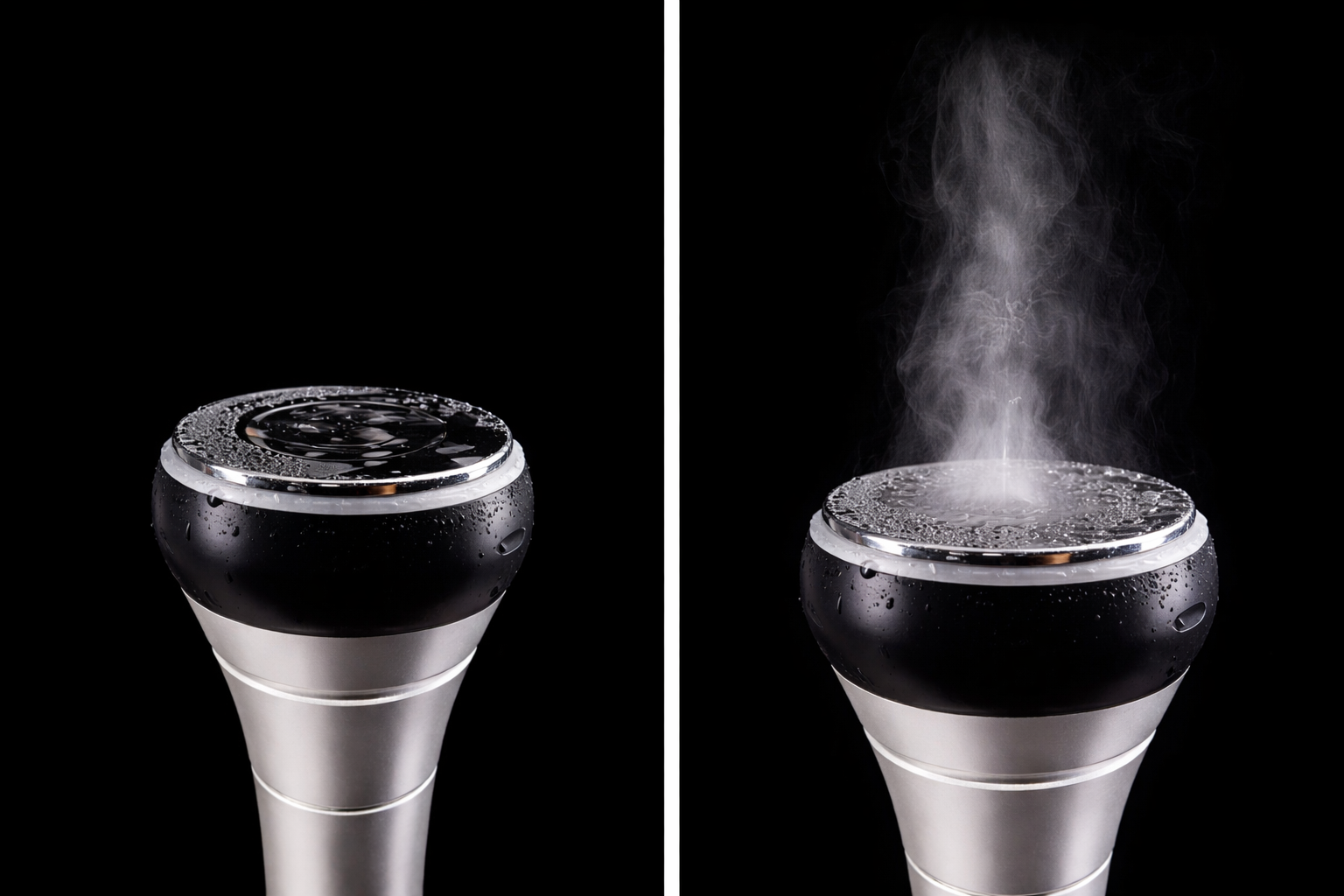 Before you touch a client, you should perform a water test on your cavitation wand.
- Place a few drops of water on the wand.
- Turn it on.
- Observe the "atomization" (the misting).
If your water isn't dancing, your settings are wrong - or your machine is possibly on the weaker side. Understanding the physics of the machine is the only way to ensure that you are actually doing the work you promised the client.
5. Master Your Machine with the Machine Settings Playbook
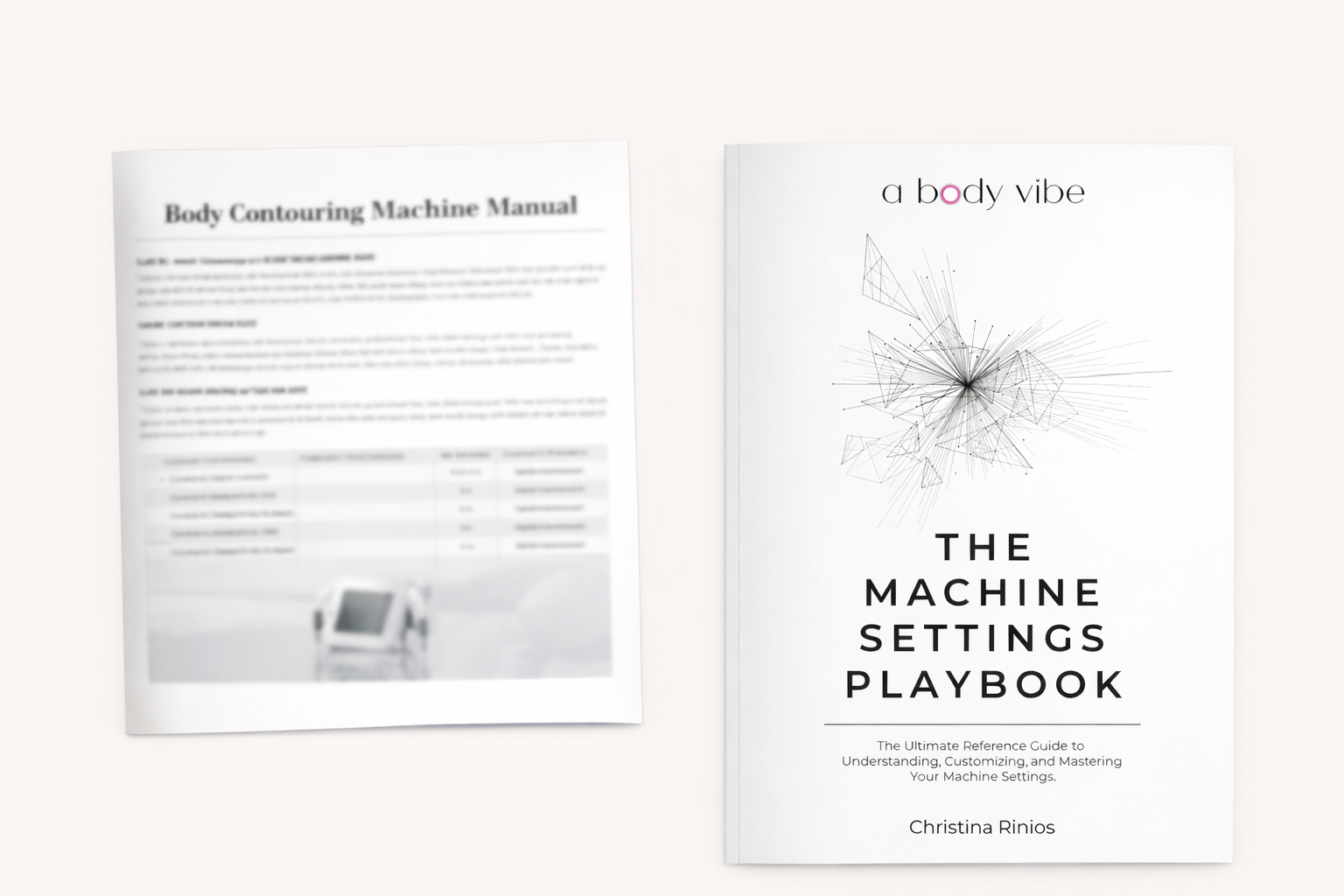 If you're tired of guessing and you're ready to actually understand the "why" behind the buttons, you need a system.
I created The Machine Settings Playbook specifically for specialists who are done with guesswork. I don't just give you over 70+ charts, I teach you how to read your machine's specs so you can adjust any machine you buy from here on out and you can set your settings correctly for every body type and client that walks through your door.
Stop Guessing. Start Calibrating.